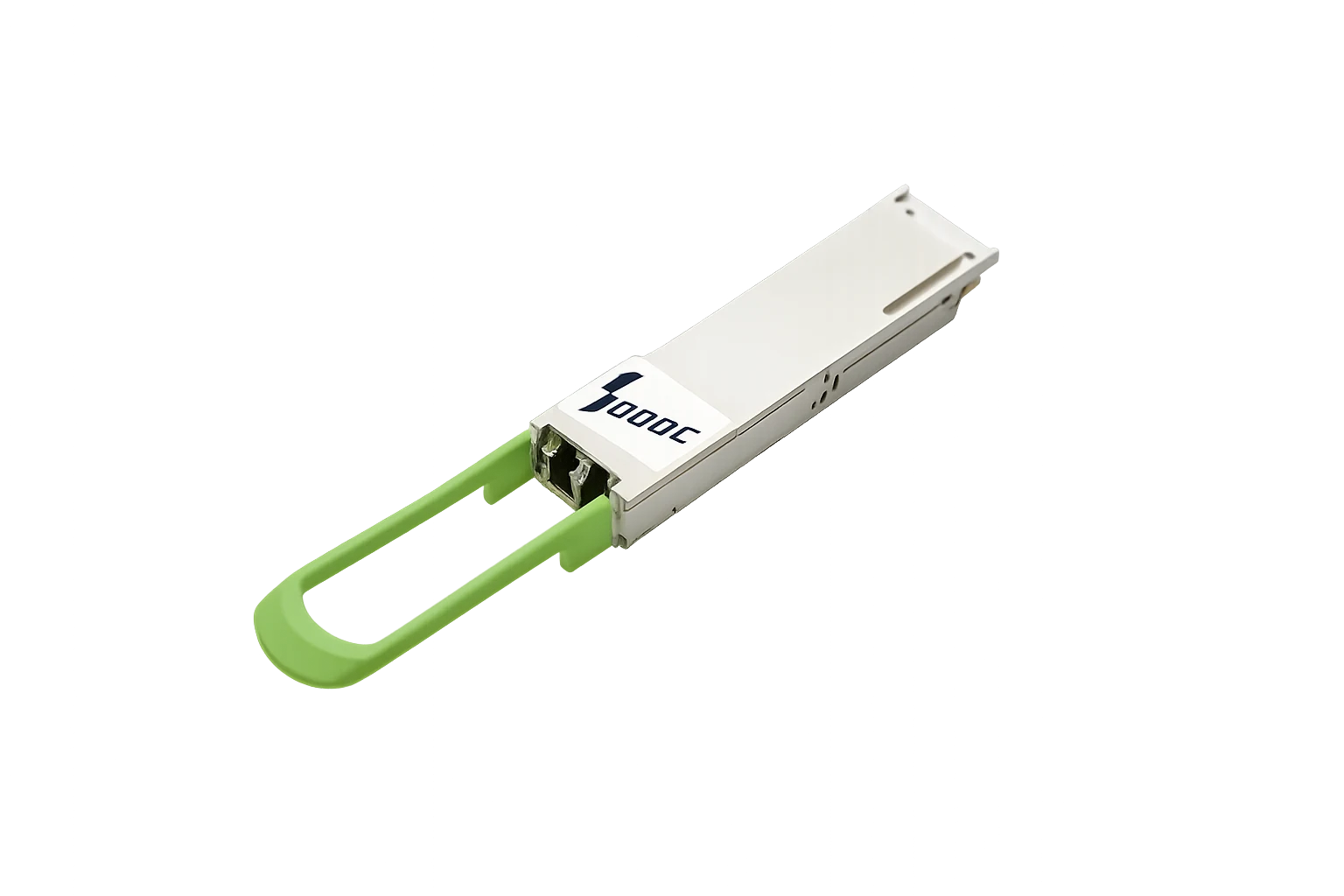
800G QSFP-DD / OSFP
800G optical transceivers for high-speed fiber links. Check the specifications for the exact part number against the host interface, fiber link and operating conditions. Include the part number and application details in your quotation request.
Product OverviewIndustry-Leading 800G Optical Transceiver Solutions
Sanoc’s 800G optical transceivers bring performance, reliability, and value to high-speed fiber-link planning.
Our 800G optical transceivers are designed for high-speed fiber links, with a listed wavelength of 850 nm, a reach of 100 m, and an MPO connector. The modules feature a hot-pluggable design; check host ports, cabling, and link conditions before integration.
Move from specification review to sample evaluation with coordinated support. SANOC brings engineering, manufacturing, quality, and sales teams together around your product and project requirements.
Backed by Sanoc's 20+ years of expertise in optical communication technology
800GData Rate
850 nmWavelength
100 mTransmission Distance
MPOConnector Type

Optical PerformanceChoose an optical link for your application by reviewing the exact part number, fiber cabling, and link conditions.
Product Highlights
Key Features & Advantages
Benefits that support optical-link selection, qualification, and integration.
100 m
1 part number at 850 nm; choose by actual link distance.
Test before you buy
Complimentary samples for qualification; shipping and freight confirmed separately. 1-year warranty on production shipments.
Compatibility Validation
Hardware validation is scoped to the exact equipment model, port, software or firmware version, protocol, and module part number.
Sampling Control
FQC and OQC stages follow production and precede shipment, with inspection under the applicable sampling plan.
EEPROM Coding
Identification settings can be evaluated for the equipment and project; coding does not change speed or transmission capability.
MPO Cabling Review
Check the MPO connection against the host port and fiber cabling.
Operating Temperature
The listed operating range is 0 to 70°C; check the actual conditions inside your equipment.
Power and Cooling Review
Include host power, module power consumption, and cooling conditions in your selection review.
Product Specifications
| Series | Data Rate | Interface | Distance | Wavelength / Cable | Output Power | Sensitivity | Temperature | Remark | Inquiry |
|---|
| SQ85W0-X1ATXX-SR8 | 800G | MPO | 100m | 850nm | — | — | 0~70° | — | Inquiry |
800G Optical Transceiver Specifications
Key technical specifications for the listed part.
| Item | Specification |
|---|
| Data Rate | 800G |
| Wavelength | 850 nm |
| Transmission Distance | 100 m |
| Operating Temperature | 0 to 70°C |
| Connector Type | MPO |
Ideal Applications
Evaluate these fiber-link scenarios against your equipment and link requirements.

Evaluate short indoor links between racks using the listed 800G specification and reach.

Review host ports and fiber cabling for core equipment within the same site.

Assess optical links between switches against the target equipment and link conditions.

Use samples on the target equipment to check module identification and link status.
Quality Assurance
SANOC applies FQC and OQC stages after production and before shipment according to the applicable sampling plan. Production shipments carry a 1-year warranty, with technical support and after-sales terms governed by the formal quotation, order terms, or product warranty policy.
Select from the listed parts
The part numbers on this page are:
- SQ85W0-X1ATXX-SR8: 100m, 850nm, MPO, 0 to 70°C
Once the tier is set, check transmit power and receiver sensitivity in the specification table to confirm sufficient link margin.
Replacing an installed module
Send us the part number or a label photo of the current module, the equipment model and the software version, and our engineers will match a part number from the table. If the host needs the existing identification settings, EEPROM coding can be evaluated for the project; coding affects identification only and does not change speed or transmission capability.
Why work with SANOC
Founded in 2000, SANOC runs its own factory in New Taipei City. Engineering, manufacturing, quality and sales support work as one team, so selection, sampling and shipment are supported directly by the manufacturing side.
The quality system is certified to ISO 9001:2015, and the optical transceivers carry TÜV SÜD certification (Laser Class 1) and RoHS compliance. FQC and OQC inspections are performed before shipment according to the product, lot size and sampling plan.
Test before you buy
A complimentary sample can be requested to check identification and link status on your own equipment; only the sample itself is complimentary, and shipping and freight are confirmed separately. Production shipments carry a 1-year warranty.
What to include in a quotation request
Company name, expected quantity, equipment model and port, fiber type and actual distance, operating temperature, and the current part number if available. The more complete the information, the faster we can confirm a suitable part number and quotation.
Identify the exact package behind the offered configuration
Before planning an installation, compare the proposed module's complete mechanical and electrical details with the host port documentation. A high-speed family title does not settle the package, cage fit or cooling arrangement of a specific offered part. Check the space needed for insertion, cable handling and removal after neighboring ports are populated. Preserve those requirements in the equipment plan so a later purchasing substitution is reviewed against the actual installation rather than the aggregate data rate alone.
Specify the complete MPO connection
The listed optical configuration uses MPO, but that connector name is only the beginning of a patching specification. Obtain the exact mating, polarity and fiber requirements for the proposed module and peer optic. Trace the route through trunks, panels and patch leads, retaining their identification in the acceptance record. Where existing MPO cabling is reused, compare its complete configuration instead of assuming a visually similar connector preserves the required optical path.
Record more than initial link establishment
Evaluate the connection on the intended equipment with representative traffic and the planned surrounding port population. Save the available optical-channel observations, host errors and link events together with the configuration used. If a problem appears, preserve the initial readings and make one controlled substitution at a time. For maintenance, keep the accepted module, peer and cabling arrangement as a set. This gives a future technician a repeatable comparison when either an optic or part of the fiber route changes.
Frequently Asked Questions
How do I choose the reach?
Choose the part number that matches the actual link length, then check loss and margin against the values in the specification table.
What operating temperature is listed, and how are industrial requirements reviewed?
The listed operating range is 0 to 70°C. If conditions inside your equipment fall outside this range, provide the environmental requirements so a suitable part can be confirmed before selection.
Can I test a sample first?
Yes. A complimentary sample is available for testing on your equipment; only the sample itself is complimentary, and shipping and freight are confirmed separately.
Can EEPROM coding for a specific equipment brand be provided?
EEPROM coding can be evaluated for the equipment model and project. Coding affects identification only; it does not change speed or transmission capability.
Can I request a different reach or wavelength?
The listed specification is 100 m at 850 nm; other requirements can be submitted for project evaluation, subject to product-data confirmation and engineering review. EEPROM coding does not change optical transmission capability.
What warranty applies?
Production shipments carry a 1-year warranty; DOA and after-sales terms follow the formal quotation or order terms.
Do samples and production shipments have the same warranty and service terms?
Production shipments carry a 1-year warranty; sample terms need separate confirmation. Warranty and DOA handling follow the formal quotation, order terms, or product warranty policy.
How is suitability for a specified device confirmed?
Provide the complete device model, port, software or firmware version, protocol and exact part number. Compatibility results apply only to the validated device, software, port and part-number combination.
Does the same MPO connector confirm 800G host compatibility?
The same connector still requires hardware validation for the exact equipment model, port, software or firmware version, protocol, and module part number. EEPROM coding affects identification only; it cannot change port speed, the electrical interface, or protocol capability.
What inspections are performed before shipment?
Sanoc applies FQC and OQC quality-control stages after production and before shipment. Inspection follows the product, lot size and applicable sampling plan.
How does shipment inspection differ from testing a sample on my equipment?
Shipment inspection uses FQC and OQC under the applicable sampling plan, with inspection items set by the product, lot, and procedure. Sample testing checks module identification and link status on your target equipment.
Does compliance with IEEE, SFF or MSA mean compatibility with every device?
No. These standards define basic interfaces, form factors, pin assignments and data formats. Actual compatibility must still be checked against the device, port, software or firmware version, protocol and module part number.
Is an established link enough to proceed directly with deployment?
Do one more check before deployment: transmit and receive optical power, DDM/DOM alarms, temperature, link loss and compatibility with the target platform.
Can host compatibility be confirmed from this page alone?
No. It must be checked for each combination of the exact equipment model, port, software or firmware, protocol, and applicable part number.
Do the listed specifications indicate stock availability or a fixed lead time?
No. Supply status, version, and lead time are confirmed for the applicable part number during the formal quotation process.
What information is needed for a quotation request?
Please provide the equipment and port, software or firmware, fiber or cable, distance or length, temperature, quantity, and requested delivery date.
Are the listed reach and optical values guaranteed in the field?
No. Actual links are also affected by the fiber, connectors, loss, host, and environment. A final decision requires the datasheet for the applicable part number and project validation.
What to confirm before selecting
The table does not confirm stock, lead time, host compatibility or final approved specifications. Final details must be confirmed against the quotation datasheet for the exact part number and the project requirements. Supply status, revision and lead time must be confirmed for the exact part number during the formal quotation. The actual link also depends on fiber, connectors, loss, the host and the environment. Use the exact-part-number datasheet and project validation for the final decision.
- Complete device model, port, software or firmware version, and protocol.
- Required data rate, interface or connector, and fiber or cable type.
- Actual reach or cable length, operating temperature, and deployment environment.
- Quantity, requested delivery date, and the part number or compatibility question to verify.
Selection and inquiry resources
Need help selecting or verifying compatibility?
Send us the device model, application requirements, and quantity to discuss suitable products, a quote, and lead time. If you already have a part number, please include it.
Request a QuoteApplications and deployment guides
Plan an 800G transceiver supplier inquiry
Use the listed series as the starting point for a complete part-number and datasheet request. Identify the required host form factor and power or cooling constraints before selecting a module. Product-specific origin and supply terms remain subject to the product page, quotation and order records.
Prepare the host and cabling details
- Required series or complete part number and form factor, quantity, delivery country or region, and requested delivery date.
- Both equipment models, actual ports and port modes, software or firmware versions, and protocol.
- Fiber type, MPO connector and polarity, route length, operating environment and host power or cooling limits.
Qualification and order conditions
SANOC can assist with EEPROM coding and hardware validation for the specified equipment, port, software version, protocol and module part number. Results apply only to the validated equipment and software combination. EEPROM coding cannot change port speed, PHY, electrical interface or protocol capability.
Complimentary samples are available for qualification testing in your equipment environment. Complimentary refers to the sample itself; shipping arrangements and freight are confirmed separately by destination and project.
FQC and OQC are performed according to lot size and the applicable sampling plan. OQC primarily covers visual inspection. Inspection items, sample quantities and records depend on the product, lot and applicable procedure.
Products carry a 1-year warranty. Warranty, DOA, returns and after-sales terms follow the formal quotation, order terms or warranty policy. Confirm the complete part number, quantity, supply status, delivery schedule and destination in the quotation.
Request an 800G quotation